LEAD Reverse Mentoring Pair
Lara do Amaral Silva and Laura Miller
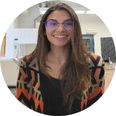 Lara do Amaral Silva, PhD, Reverse Mentor
Lara do Amaral Silva is an assistant professor of neurobiology at Wake Forest University. Her journey began as a curious child in a small town in the Brazilian countryside. This curiosity and her desire to create a promising future motivated her to overcome many obstacles. Amaral Silva became the first in her family to attend university, navigated financial challenges and cultural discouragement to pursue a career, learned English to engage with scientific literature, and broke through social barriers as a Latina woman in academia.
She is very happy for the opportunity to answer exciting scientific questions while mentoring and teaching the next generation of scientists and professionals. Amaral Silva's lab research focuses on understanding physiological mechanisms that allow animals in nature to overcome stressors that otherwise cause major human health issues, specifically concerning metabolic challenges to the brain. They are investigating neuroprotective mechanisms that birds evolved against hypoxia and insulin resistance using electrophysiology, microscopy, and behavioral experiments.
What new skills do you seek to gain as a reverse mentor?
This is a great opportunity to gain mentorship skills. First, I seek to exercise strategic planning and problem-solving, and I believe this reverse mentorship program is a great environment for that. FASEB LEAD creates a partnership where the mentor provides essential perspectives on the obstacles encountered by individuals from underrepresented groups at the start of their careers, and the mentee has a comprehensive understanding of the academic system, its power, and pitfalls. Together, we can develop strategies for advancing diversity, equity, and inclusion (DEI) in ways that genuinely benefit underrepresented individuals.
Second, I seek to develop a leadership style where I am heard without losing sight of how other people's experiences in different positions can give insights into resolving collective issues. Again, this is a core value of the program; thus, I feel fortunate to be part of it. Although leading, I can also learn from my mentee's experience as a professor and leader since any established professional willing to be mentored by early career professionals must lead by learning, experimentation, and example.
How is mentoring important to your career development?
Mentoring is essential to my job as an assistant professor, where I engage in many types of mentorship daily. In the classroom, I teach them the important content and mentor them to achieve the knowledge essential for their success and the skills necessary for the next steps of their career, e.g. project development, teamwork, public speech, etc. As an academic advisor, I help them navigate their scholarly choices to align with their career goals. In my research lab, I mentor undergraduate and doctorate students by teaching them key techniques, such as asking relevant questions, critical thinking, and problem-solving. Besides that, I provide career mentorship, helping students align their choices and skills to chart their paths post-training. As a National Science Foundation (NSF) panelist and grant reviewer, I mentor scientific decisions of agencies and journals. Finally, I contribute to departmental decisions; for example, I serve on the search committee, and I can use my experience as the last person hired and as a neurophysiologist to mentor our choices in the search.
My training during my master's, doctorate, and postdoctoral did not fully prepare me for the diverse mentoring responsibilities I encounter as an early-career professional. I am dedicated to mastering my current leadership duties and preparing for future growth. As my career progresses, my mentorship responsibilities will expand, allowing me to support more individuals and take on greater roles within the academic community such as leading committees, representing my department in university initiatives, and engaging as a leader in national committees and professional societies. Those are all essential for my career professional development and for cultivating a supportive academic environment.
Lara do Amaral Silva is a member of American Physiological Society, a FASEB member society.
 Laura Miller, PhD, Reverse Mentee
Laura Miller joined Kansas State University in 2023 as an associate professor in veterinary virology. She received her Bachelor of Science with honors in medical microbiology from the University of Edinburgh, Scotland. She obtained her doctorate in molecular virology from the Institute for Animal Health, Pirbright, conferred by the University of Reading, England. After serving as a leader of the serological testing at Pirbright during the United Kingdom foot-and-mouth disease epidemic of 2001, Miller moved to the United States as a research microbiologist at the U.S. Meat Animal Research Center, Clay Center, Nebraska. In 2007, Miller moved within the United States Department of Agriculture (USDA) to the National Animal Disease Center in Ames, Iowa. She has published more than 68 peer-reviewed manuscripts with 1,921 citations. She currently serves as past president of the American Association of Veterinary Immunologists, Member-At-Large NC-229 Multistate Committee for Detection and Control of Porcine Reproductive and Respiratory Syndrome Virus and Emerging Viral Diseases of Swine, and a Project Director of the NSRP-8 National Animal Genome Research Program.
Miller’s multidisciplinary research focuses on virus-host cell interactions and applying this knowledge to understand the pathogenesis and immunology of viral pathogens. Miller was the first to report on the essential role of the cytoplasmic domain of the αvβ6 integrin in endocytosis-mediated infection by foot and mouth disease virus (FMDV). She has used and adapted evolving technologies (Microarrays, Serial Analysis of Gene Expression, Digital Gene Expression Tag Profiling Expression, RNA-Seq, and Spatial Transcriptomics, prediction matrices, cell lines and organoids) to conduct basic and applied research that has characterized the pig’s cellular response to viral pathogens. Miller’s host-response studies created the most extensive immunoinformatics dataset on host gene expression in response to porcine respiratory viral infection. Miller’s goals are to develop new or modify established techniques to characterize the host response at the molecular and cellular levels, to analyze the massive datasets generated by high-throughput genomic experiments to advance the understanding of disease expression, and to apply this knowledge toward high-impact products.
Laura Miller is a member of American Association of Immunologists, a FASEB member society.