Washington Update
FASEB Annual Capitol Hill Day Demonstrates the Power of Advocacy
By: Jennifer ZeitzerThursday, March 26, 2026
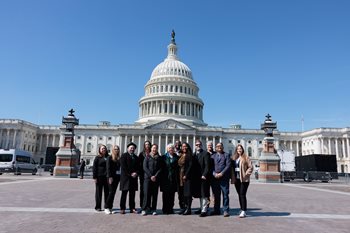 On March 18, advocates from 25 states representing 19 of the 20 societies of the Federation of American Societies for Experimental Biology (FASEB) participated in the federation’s annual Capitol Hill Day. 43 volunteer leaders who serve on the Board of Directors and Science Policy Committee and the FASEB Howard Garrison Advocacy Fellows took time away from their research and teaching to visit their Senators and Representatives. Through their combined efforts, the advocates visited a total of 82 members of Congress (44 Senate and 28 House of Representatives offices). The effort was bipartisan as FASEB’s representatives met with staff from 44 Democratic offices and 37 Republicans. Ten of the meetings involved direct participation and engagement by Senators and Representatives.
During their congressional meetings, advocates noted that 2025 was very disruptive and caused great uncertainty for individual researchers as well as the next generation of scientists due to the termination of grants, delayed release of grant funds, impoundment of funding approved by Congress, and the National Institutes of Health (NIH) shifting to multi-year funding. The FASEB representatives expressed appreciation to congressional offices for working in a bipartisan manner to finish the FY 2026 appropriations bills in January and urged their legislators to maintain constant, bipartisan oversight to ensure NIH and NSF spend appropriated funds as approved by Congress.
 Advocates also thanked their Senators and Representatives for including language in the FY 2026 NIH and NSF funding bills preventing those agencies from capping Facilities and Administrative (F&A/indirect) costs at 15 percent and the directive to involve stakeholders in developing a new transparent model to account for those charges. The impact of NIH using multi-year funding to support grants was of especially strong interest to congressional offices that wanted to know what that meant for individual researchers who applied for funding from NIH in FY 2025. Advocates shared personal stories as well as a factsheet about multi-year funding, demonstrating that the practice reduced support for early-career researchers and decreased the chances of securing an NIH grant.
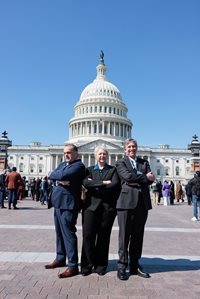 Additionally, offices were given FASEB’s FY 2027 funding recommendations for five science agencies. Advocates provided the offices they visited with key factsheets with updated FY 2025 agency spending showing the impact of science funding by state and congressional districts, and learned more about what they needed to do during these uncertain times to further their efforts. These include increasing outreach to all congressional offices, making in person state advocacy visits, and providing stories to Senators and House members about the impact of the changes that have already occurred. One advocate said he was seeing a brain drain from the U.S. to countries such as China due to the resources being provided there for their cutting-edge research into new drugs and critical technologies. Other examples were institutions having to implement hiring freezes, principal investigators having to lay off lab personnel and trainees, and early-career researchers uncertain about continuing a career in research.
Overall, the congressional meetings went well, and the FASEB advocates were thanked for making the trip to Capitol Hill. The updated state and district NIH and NSF funding fact sheets were a highlight of the visits, as were the personal stories shared by the researchers.
Capitol Hill Day highlights were summarized on FASEB’s X, LinkedIn, and Bluesky accounts. Each Spring, FASEB brings federally funded scientists to Capitol Hill to share the impact of federal funding at the state and local level and engage in direct advocacy with Congress.
Photo credits to Anthony Bolognese of Capitol Hill Photo.